For celiac disease & gluten sensitivity

Is it gluten free?
Know, and know why.

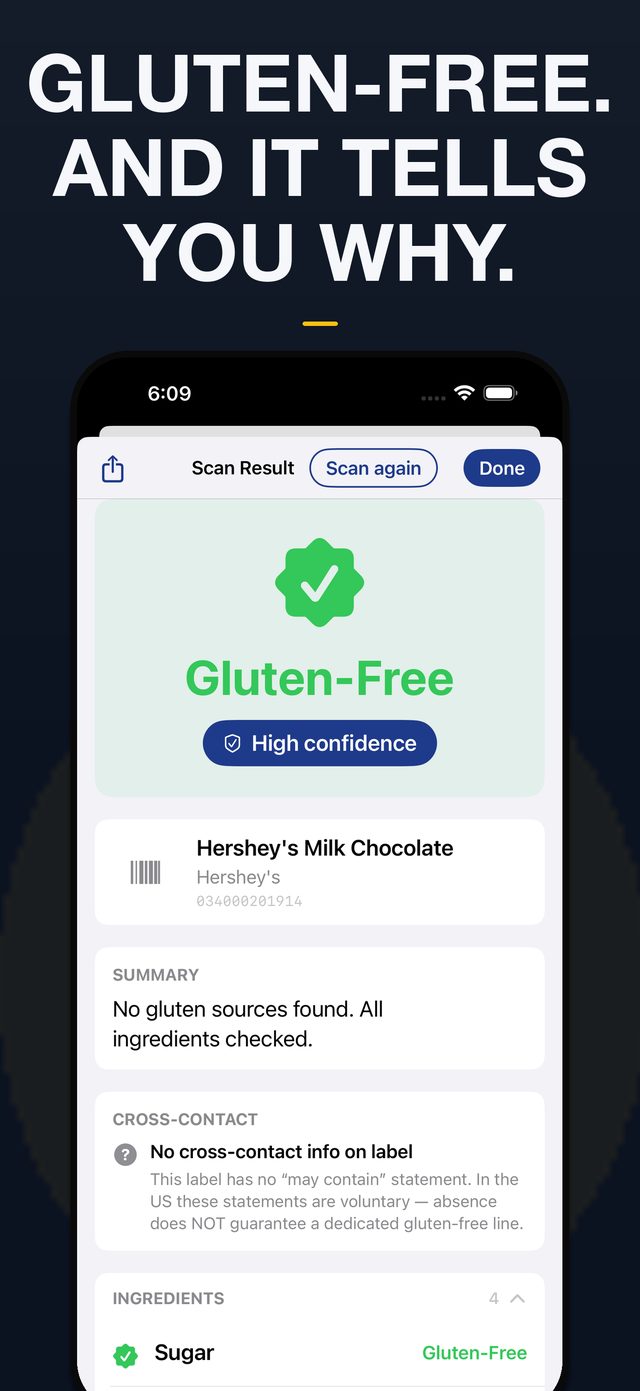
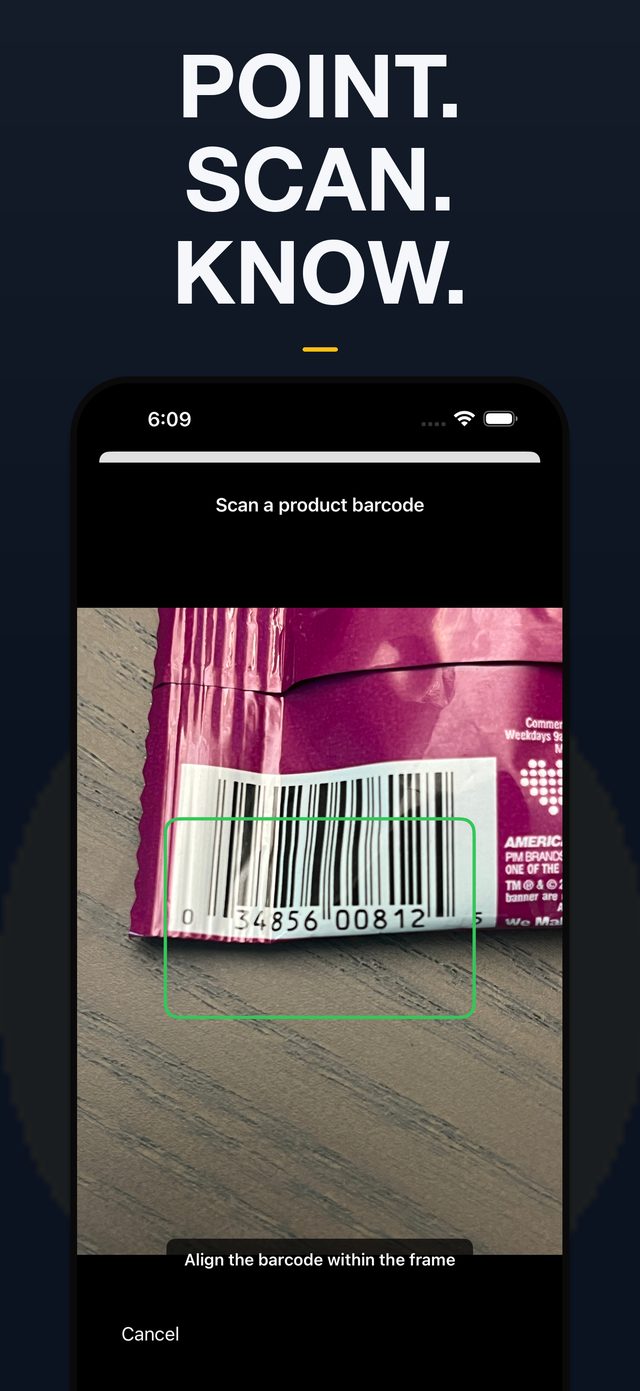
Scan the barcode. If it isn't in the database, GlutenCheck reads the ingredient label itself. Every verdict explains what it found and cites the rule behind it — so you're not trusting a green checkmark on faith.

Works offline No subscription No ads No account
GlutenCheck app icon — a wheat stalk inside a scanner frame

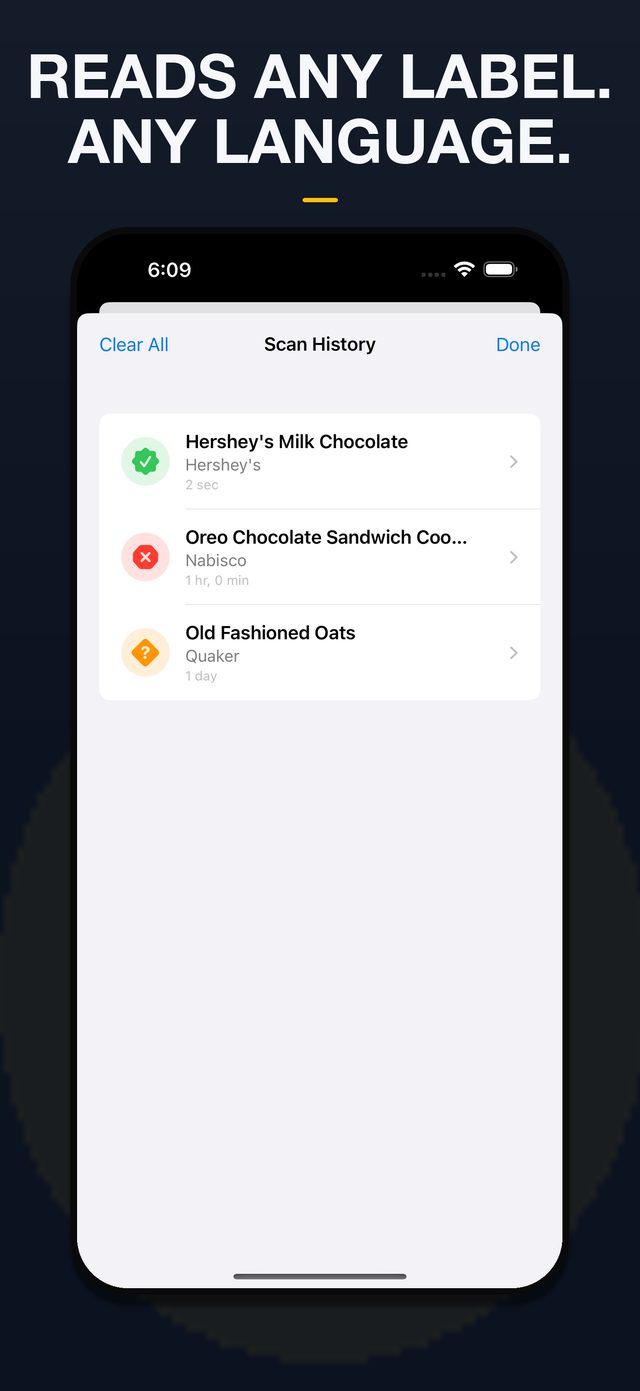
Gluten-Free

No gluten source found in the ingredients, for the strictness you chose.

Contains Gluten

A gluten grain is named outright — and we show you exactly which ingredient.

Needs Review

Something is genuinely ambiguous. We say so instead of guessing.

Why it's different

Most scanners hand you a verdict. This one hands you the reasoning.

A green checkmark with no explanation is a request for blind trust. When a product is safe, GlutenCheck tells you why. When it isn't, it names the ingredient. When it can't be sure, it says that too.

94

Ingredients, aliased and cited

Malt extract, hydrolyzed wheat protein, brewer's yeast, unqualified “flour” — each with its reasoning and a source, from the FDA gluten-free rule to GFCO guidance.

113

Rules that know the difference

Buckwheat isn't wheat. Maltodextrin isn't malt. Distilled vinegar is fine; malt vinegar isn't. The traps that catch other scanners are written into the ruleset.

0

Network calls to get a verdict

The classifier ships inside the app. It runs in a supermarket aisle with one bar of signal, or none. We never see what you scanned.

17

Languages, reading real labels

The label reader handles ingredient lists in seventeen languages — useful for imports, and for travelling with a condition that doesn't take holidays.

The honest part

“No warning” is not the same as “safe”.

In the United States, “may contain wheat” labelling is voluntary. A product with no cross-contact warning may still be made on a shared line — the manufacturer simply isn't required to tell you.

Scanners that stay silent here imply a safety they haven't verified. GlutenCheck reads the warning when it exists, and tells you plainly when there isn't one.

Label says“May contain wheat”
We sayFlagged — shared-line risk, escalated for celiac
Label saysnothing at all
We sayNo cross-contact statement — and US labelling is voluntary, so absence isn't a guarantee
One app, four thresholds

Why you avoid gluten changes what counts as safe.

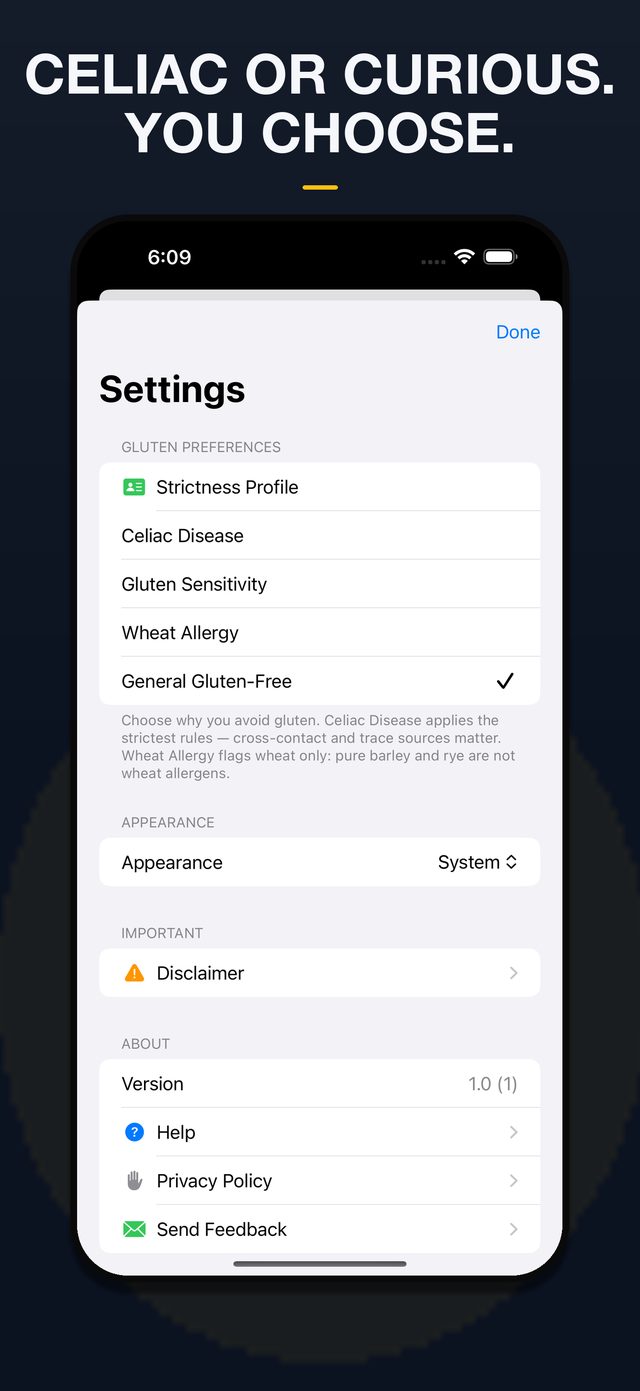
Pick a profile and the ruleset shifts with it. A wheat allergy isn't celiac disease, and pretending otherwise makes an app either dangerous or useless.

Celiac Disease

The strictest reading. Uncertified oats and any cross-contact warning are flagged.

Gluten Sensitivity

Gluten grains flagged, with the ambiguous cases still surfaced for you to judge.

Wheat Allergy

Wheat only. Pure barley and rye aren't wheat allergens — so they're not flagged as such.

General

Avoiding gluten without a diagnosis. The clear cases, without the noise.

How it works

Point, read, decide.

Scan the barcode

GlutenCheck looks the product up in Open Food Facts, with USDA as a fallback.

Not found? Read the label

The camera becomes a label reader. No dead end, no “product not found” shrug — the moment other scanners give up.

Get a verdict that argues its case

Every flagged ingredient, its reasoning, its source, and an honest note on cross-contact.

Straight from the app

What a verdict actually looks like.

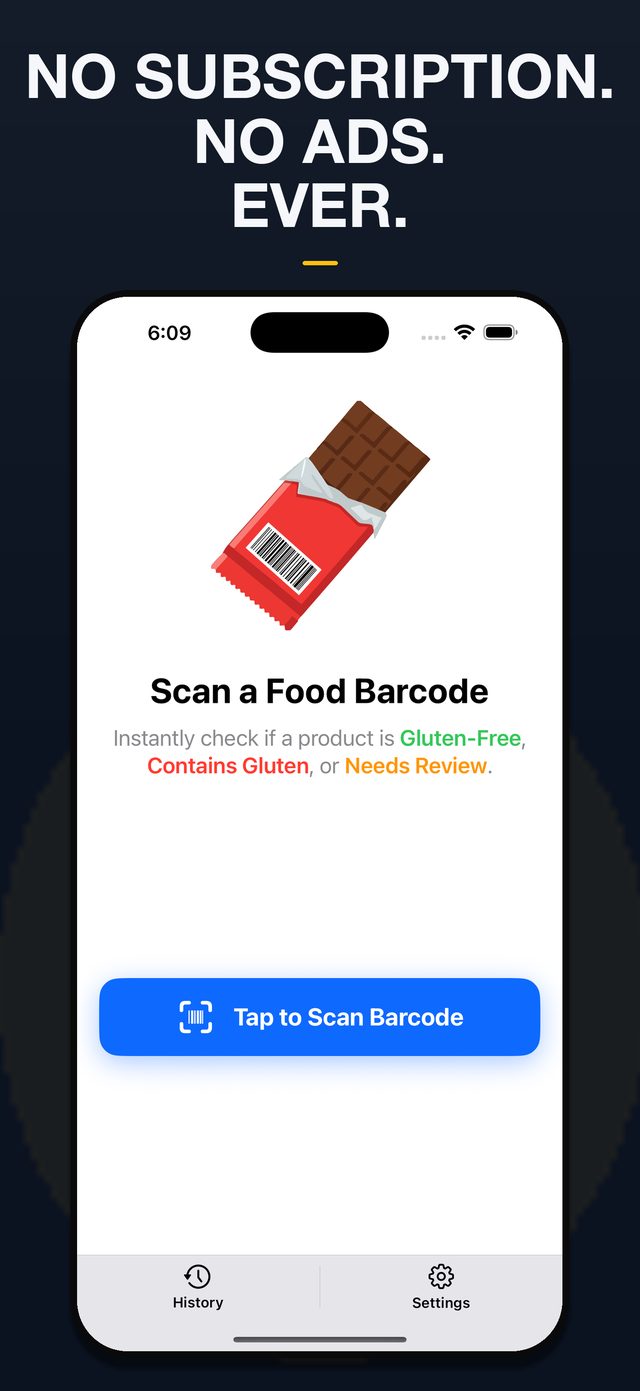
A gluten-free verdict with reasoning and a cross-contact section No subscription, no ads, ever Scanning a product barcode with the camera Scan history with mixed verdicts Strictness profile settings for celiac, sensitivity and wheat allergy
Pricing

Pay once. Or never.

$14.99

One time. Not a subscription.

  • 10 scans every month, free, forever
  • Lifetime Unlock removes the limit — permanently
  • No ads, ever — not even between scans
  • Family Sharing included
  • No account, no email, no newsletter
Asked and answered

Fair questions.

Can I trust it with celiac disease?

Trust it to read a label carefully and show its reasoning — that's what it's for. But GlutenCheck is an informational tool, not medical advice and not a certification body. Ingredient lists change, and no app can see inside a factory. For critical products, verify with the manufacturer or look for a certified gluten-free mark.

Why are oats flagged when oats are gluten free?

Because they usually aren't, in practice. Oats are naturally gluten free but are routinely grown, transported and milled alongside wheat and barley. Certified gluten-free oats pass. Ordinary oats get flagged — and a minority of people with celiac react to avenin, the oat protein itself.

Does it work without signal?

The verdict does, always — the ruleset is on your phone. Barcode lookups need a connection to reach the product database, but if you're offline you can still read the label with the camera and get a full answer.

What do you do with my scans?

Nothing. Scans are classified on your device and your history stays there. We collect anonymous usage counts to improve the app, and no scan is tied to you. Read the privacy policy — it's specific.

Why isn't it free like the others?

The free ones sell your attention or your subscription. Ten scans a month costs you nothing, and if the app earns it, one payment keeps it running. We'd rather be paid by you than by an advertiser.
Bring it to the supermarket.

Ten free scans a month. No account, no ads, no subscription — and a verdict that tells you why.

Coming soon to the App Store